


Already purchased? To view Sign In
AI Fundamentals Crash Course একটি সম্পূর্ণ বেসিক-টু-ফাউন্ডেশন লেভেলের কোর্স, যেখানে আপনি শিখবেন কীভাবে Artificial Intelligence (AI) কাজ করে এবং আধুনিক AI টুল ও সিস্টেমের মূল কনসেপ্টগুলো পরিষ্কারভাবে বুঝে নিতে হয়—একেবারে শূন্য থেকে।
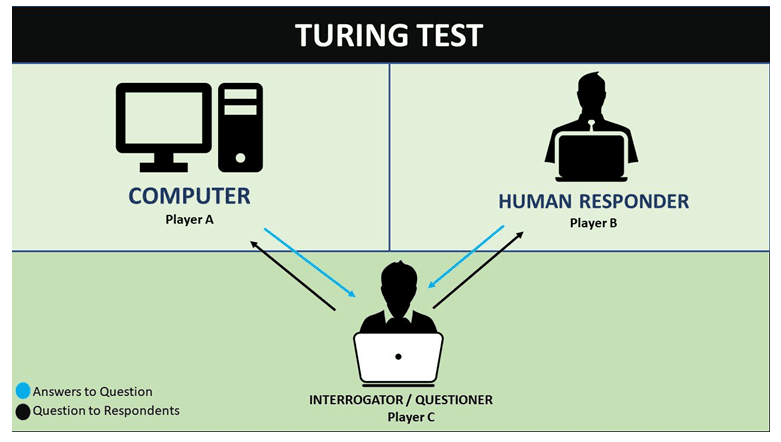
1950: Alan Turing introduces the Turing Test to evaluate machine intelligence.
1956: The term Artificial Intelligence is coined at the Dartmouth Conference, marking the official birth of AI research.
Turing Test: The Turing Test, proposed by Alan Turing in 1950, is a test of a machine's ability to exhibit intelligent behavior equivalent to that of a human.
AI focuses on problem-solving and symbolic reasoning.
Development of early programs like ELIZA (a chatbot simulating a psychotherapist).
Limited by weak computational power and small datasets.
Optimism fades as funding declines due to unmet expectations.
AI struggles with scalability and real-world applications.
Rise of Expert Systems, programs designed to mimic human decision-making in specific fields (e.g., medicine, engineering).
Renewed funding and commercial interest in AI.
Later decline due to high costs and maintenance challenges.
Shift toward machine learning and statistical models.
1997: IBM’s Deep Blue defeats world chess champion Garry Kasparov, showcasing AI’s growing power.
Explosion of digital data fuels machine learning progress.
AI becomes practical in speech recognition, image classification, and online recommendations.
AI integrated into search engines, fraud detection, and customer support.
Breakthroughs in deep learning using neural networks.
AI achieves superhuman performance in image recognition and language translation.
2011: IBM Watson wins Jeopardy!
2016: Google DeepMind’s AlphaGo defeats world champion Go player Lee Sedol.
Rise of Generative AI models like GPT, DALL·E, and Stable Diffusion.
AI widely used in healthcare, finance, autonomous vehicles, robotics, and creative industries.
Increasing debates around AI ethics, bias, and regulation.
AI is advancing rapidly, and the next decades are expected to bring transformative changes across industries and daily life. Experts project three major directions for AI’s future:
Everyday Integration: AI assistants will become more personalized, capable of handling complex daily tasks such as financial planning, healthcare monitoring, and legal support.
Autonomous Systems: Wider adoption of self-driving cars, delivery drones, and AI-powered robots in logistics and manufacturing.
Opportunities: Efficiency gains, cost reduction, enhanced convenience.
Risks: Job displacement in routine and manual sectors, ethical concerns over surveillance and privacy.
Definition: Machines capable of human-like reasoning across domains.
Potential Impact:
Could work alongside humans as partners in research, creativity, and decision-making.
Might solve global challenges such as climate modeling, medical cures, and space exploration.
Risks: Misaligned goals, lack of transparency, and potential misuse by governments or corporations.
Definition: AI surpassing human intelligence in all domains, including creativity, strategy, and emotional intelligence.
Potential Impact:
Revolutionary breakthroughs in science and technology beyond human comprehension.
Possible governance of global systems (economy, defense, climate control).
Risks:
Loss of human control over AI systems.
Existential risks if AI develops objectives misaligned with human values.
Philosophical and ethical challenges about humanity’s role in a world dominated by superintelligence.
