


Already purchased? To view Sign In
AI Fundamentals Crash Course একটি সম্পূর্ণ বেসিক-টু-ফাউন্ডেশন লেভেলের কোর্স, যেখানে আপনি শিখবেন কীভাবে Artificial Intelligence (AI) কাজ করে এবং আধুনিক AI টুল ও সিস্টেমের মূল কনসেপ্টগুলো পরিষ্কারভাবে বুঝে নিতে হয়—একেবারে শূন্য থেকে।
Machine Learning is a branch of Artificial Intelligence (AI) that allows computers to learn from data and improve their performance without being explicitly programmed.
Instead of giving the computer fixed instructions, we give it examples (data) so it can:
Find patterns in the data.
Make predictions or decisions when it sees new information.
Machine Learning uses historical data to identify patterns and make predictions about new, unseen cases.
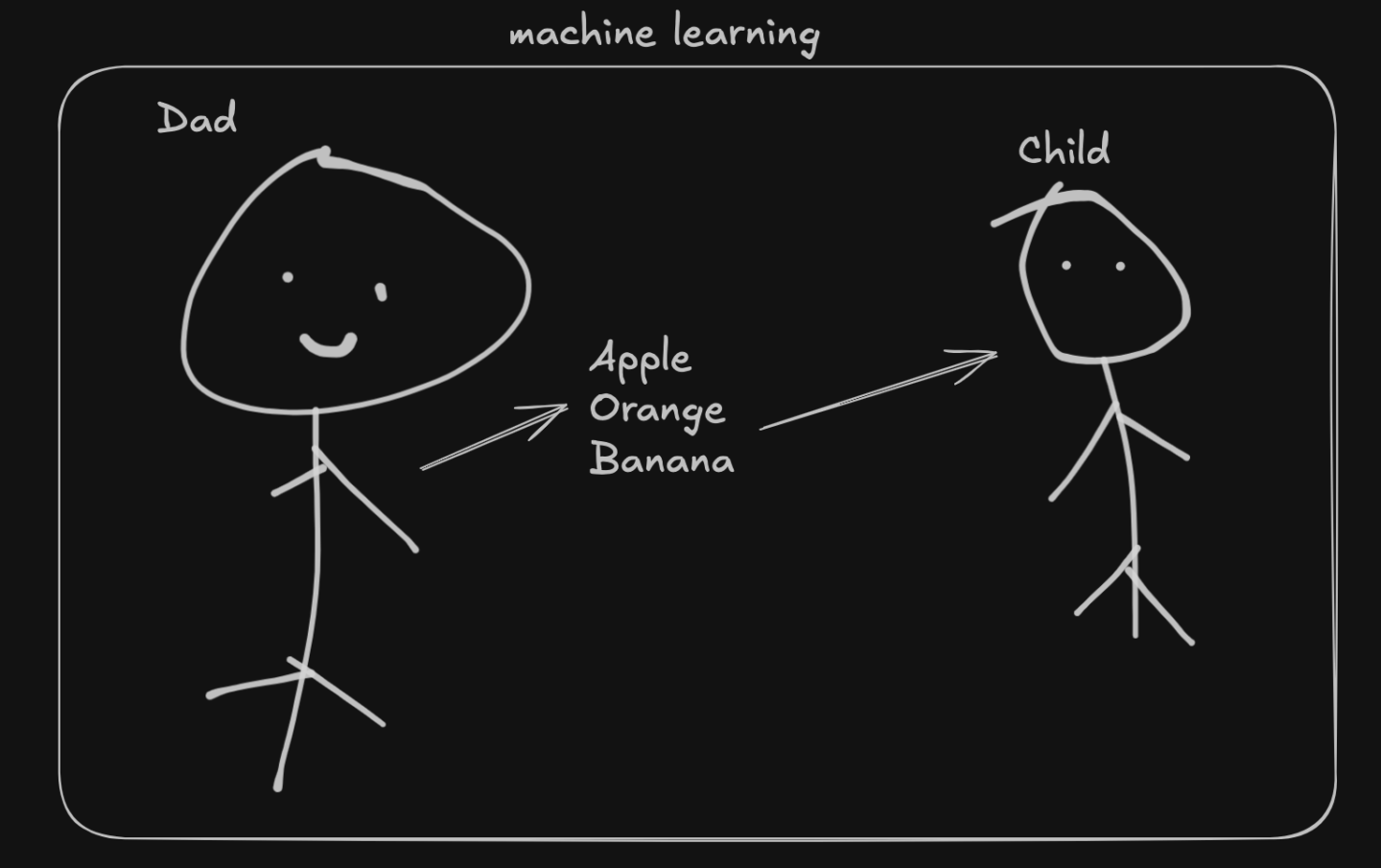
You show the child many apples 🍎, bananas 🍌, and oranges 🍊.
The child learns the patterns (color, shape, size).
Next time, even if the child sees a new apple, they can say: “That’s an apple!”
Similarly, an ML model learns from training data and applies that knowledge to new, unseen data.
Netflix/YouTube → Recommending shows or videos you may like.
Banking → Detecting fraudulent transactions.
Healthcare → Predicting diseases from medical images.
E-commerce → Suggesting products based on your browsing history.
SO, Machine Learning = Teaching computers to learn from experience (data) and get better over time.
Supervised, Unsupervised, and Reinforcement learning
Definition:
Uses labeled data (inputs with known outputs) to train models. The model learns the mapping between input → output.
Examples:
Classification: Deciding if an image contains a dog or not dog, using a dataset where each image is labeled.
Regression: Predicting house prices based on features like location, size, and number of rooms.
Key Point:
Learning is guided by correct answers during training.
Definition:
Works with unlabeled data (inputs only, no given outputs). The model finds hidden structures or patterns on its own.
Examples:
Clustering: Grouping similar items — e.g., separating images of dogs vs. cats without labels.
Business Use: Customer segmentation in supermarkets, identifying buying patterns, or spotting popular real estate property types.
Key Point:
The model discovers patterns autonomously, without knowing the “right” answer.
Definition:
A learning method where the model interacts with an environment, learns from feedback (rewards/penalties), and improves its decisions over time.
Examples:
Robotics: Teaching a robot to walk by rewarding forward movement.
Recommendation Systems: Netflix or YouTube refine suggestions based on user actions (watch, skip, like).
Key Point:
Works on a trial-and-error basis, optimizing actions to achieve the best outcome.
