


Data is the backbone of Artificial Intelligence (AI).
Data in AI refers to the raw information (numbers, text, images, audio, video, sensor signals, etc.) that machines use to learn, reason, and make predictions.
Without data, AI cannot recognize patterns or improve performance.
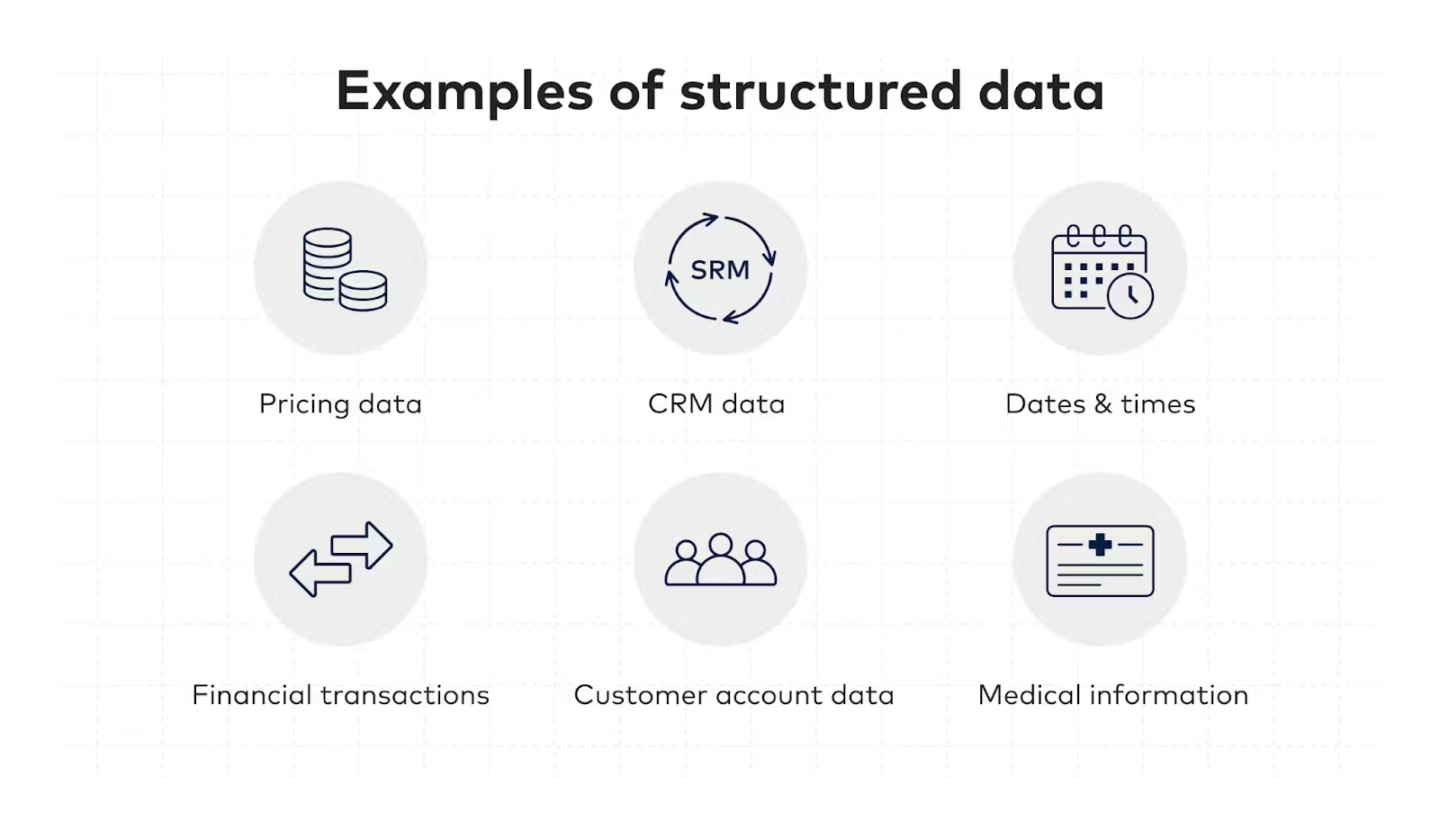
Structured Data
Organized in rows and columns (like Excel sheets).
Examples: bank transactions, stock prices, customer details.
Unstructured Data
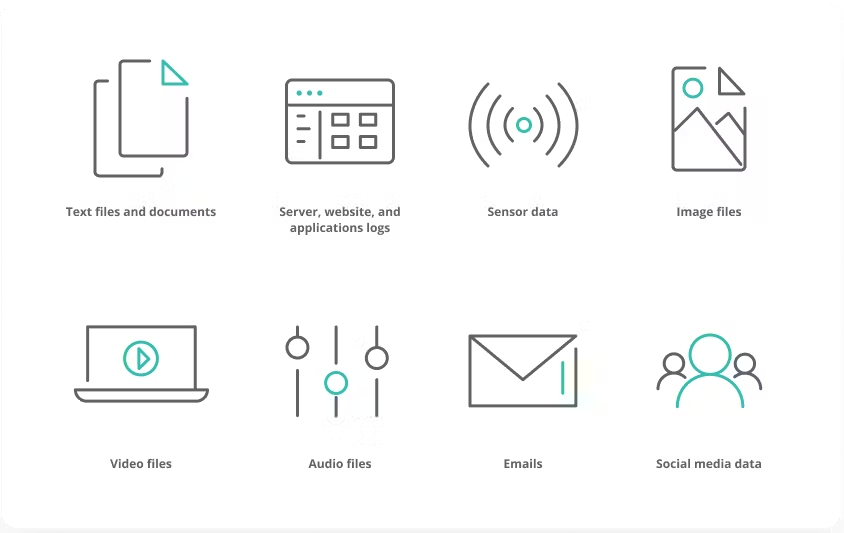
Raw, unorganized, difficult to store in tables.
Examples: emails, images, videos, social media posts.
Semi-Structured Data
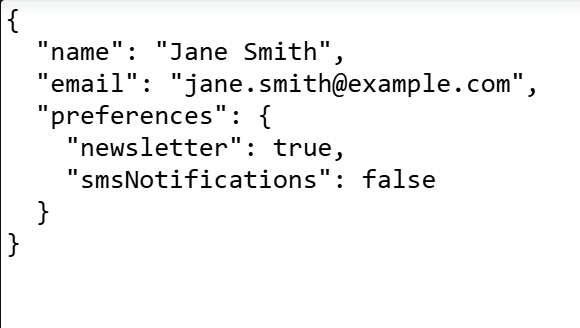
Contains some organization but not strictly tabular.
Examples: JSON files, XML data, log files.
AI models require different types of datasets:
Training Data → Used to teach the AI model.
Validation Data → Used to fine-tune and adjust parameters.
Testing Data → Used to check final accuracy and generalization.
For AI to work effectively, data must be:
Accurate (free of errors).
Relevant (fits the problem being solved).
Sufficient (enough volume for training).
Diverse (represents real-world variations).
Clean (well-preprocessed, no duplicates or noise).
Sensors and IoT devices (self-driving cars, wearables).
Databases and CRMs (business/customer data).
Web and Social Media (Twitter, YouTube, reviews).
Government and Open Data (weather, census, healthcare).
Generated Data (synthetic datasets, simulations).
Enables pattern recognition (e.g., face recognition).
Powers prediction and forecasting (e.g., stock trends, weather).
Improves decision-making (e.g., medical diagnosis).
Allows personalization (e.g., Netflix, Amazon recommendations).
Data Quality Issues: noisy, incomplete, biased data.
Privacy Concerns: handling sensitive personal information.
Bias and Fairness: AI may inherit human or systemic biases.
Data Scarcity: not enough labeled data for niche problems.
Cost of Data: collecting and cleaning is resource-intensive.
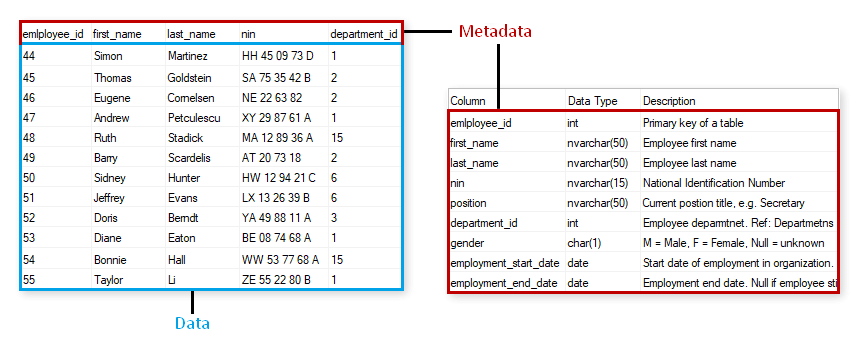
Metadata means “data about data.”
It describes the characteristics, structure, or context of a dataset, helping humans and machines understand, organize, and use the data effectively.
For example:
A photo → data.
Its file size, date taken, location, and camera model → metadata.
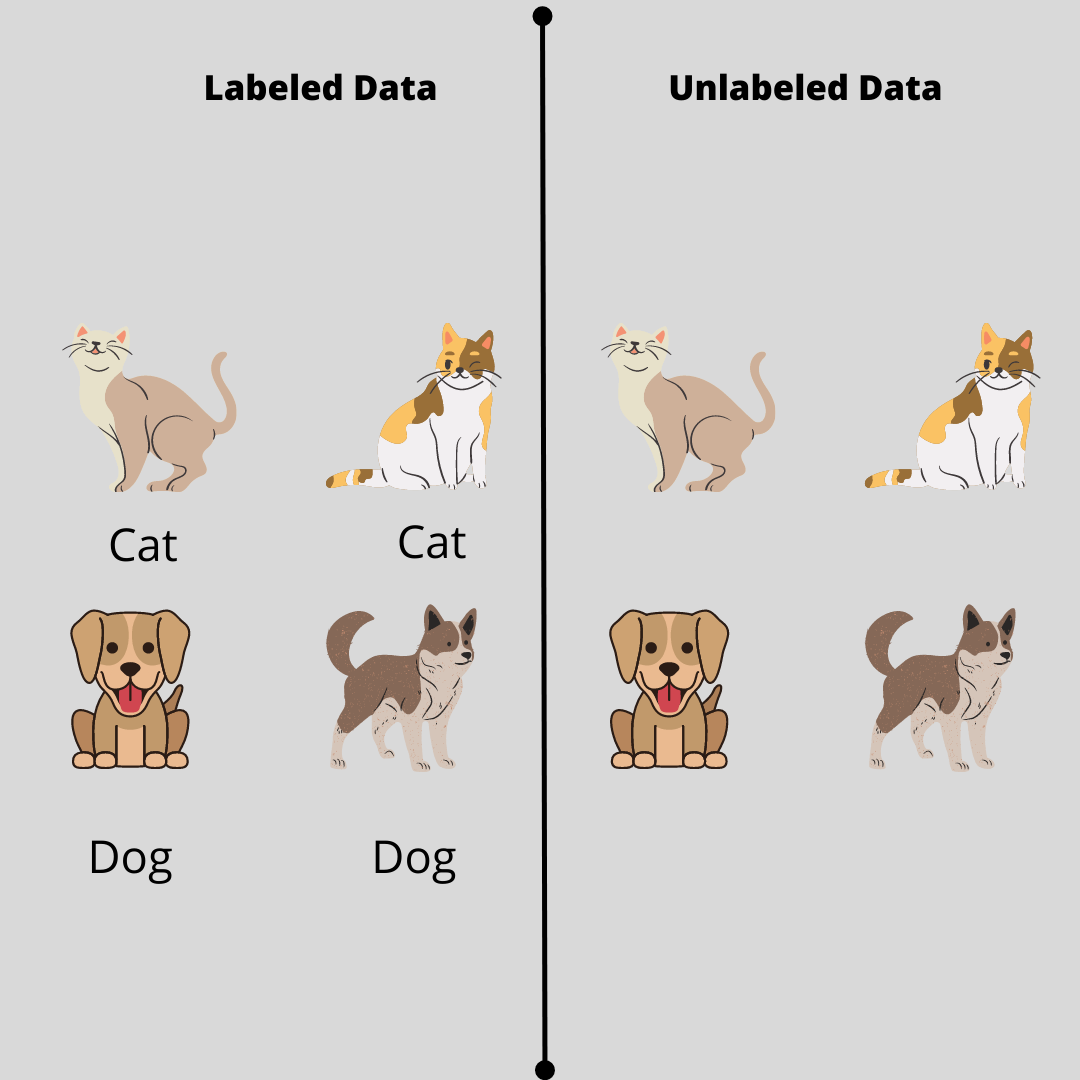
Definition: Data that has meaningful tags or annotations (labels) attached.
Each data point is paired with the correct output or category.
Used for supervised learning in Machine Learning.
Examples:
An image of a cat labeled as “Cat”.
A medical record labeled as “Diabetes: Yes/No”.
A review tagged as “Positive” or “Negative”.
Advantages:
Provides direct guidance to AI models.
Enables accurate prediction and classification.
Disadvantages:
Costly and time-consuming to create (requires human experts).
Not always scalable for very large datasets.
Definition: Raw data without predefined labels.
The system only has input data, no correct answer.
Used for unsupervised learning or semi-supervised learning in Machine Learning.
Examples:
Thousands of raw images without tags.
Social media posts with no sentiment label.
Sensor readings with no outcome attached.
Advantages:
Abundant and cheaper to collect.
Useful for discovering hidden patterns and clusters.
Disadvantages:
Harder to train AI models without labels.
Requires advanced algorithms to interpret meaning.
